

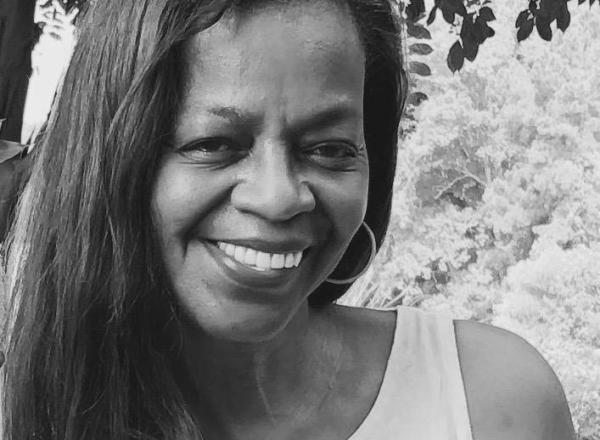
Thavolia Glymph is the Peabody Family Distinguished Professor of History and Professor of Law and holds an appointment as Faculty Research Scholar at the Duke Population Research Institute (DUPRI) and a secondary appointment in the Department of Gender, Sexuality & Feminist Studies. Her work primarily explores the history of the U.S. South with a focus on slavery, the Civil War, and Reconstruction.
Her books include most recently, The Women's Fight: The Civil War's Battles for Home, Freedom, and Nation (University of North Carolina Press, 2020) which won eight prizes: the 2021 Albert J. Beveridge Award from the American Historical Association for a “distinguished book in English on the history of the United States, Latin America, or Canada, from 1492 to the present that employ new methodological or conceptual tools or that constitute significant reexaminations of important interpretive problems” with literary merit as an important criteria; the 2021 Joan Kelly Memorial Prize from the American Historical Association in women’s and gender history; the 2021 Julia Cherry Spruill Prize from the Southern Association for Women Historians for the best book in women’s history; the 2021 Civil War and Reconstruction Book Award awarded by the Organization of American Historians ; the 2021 Mary Nickliss Prize awarded by the Organization of American Historians; the 2021 Civil War and Reconstruction award from the Organization of American Historians for the most original book on the coming of the Civil War, the Civil War years or the Era of Reconstruction; the 2021 Mary Nickliss Prize from the Organization of American Historians for the most original book in U.S women’s and/or gender history (or its colonial antecedent); the 2021 Darlene Clark Hine award from the Organization of American Historians for the best book on African American women’s and gender History; the 2021 Julia Cherry Spruill Prize from the Southern Association for women Historians for the best book in southern women’s history; the 2021 Tom Watson-Brown Foundation and the Society of Civil War Historians prize for the best book published on the causes, conduct, and effects of the Civil War; and the 2021 John Nau Prize awarded by the John L. Nau III Center for Civil War History. It was also a finalist for the 2021 Gilder Lehrman Lincoln Prize for the finest book in English on Abraham Lincoln, the American Civil War soldier, or a subject related to their era.
Glymph’s book, Out of the House of Bondage: The Transformation of the Plantation Household (Cambridge University Press, 2008) received the 2009 Philip Taft Book Prize, given to the best book on the history of American labor, and was a finalist for the Frederick Douglass Prize form the Gilder Lehrman Center for the Study of Slavery, Resistance, and Abolition at Yale University given for an outstanding non-fiction book in English on slavery, resistance, and/or abolition. She is co-editor of two volumes of Freedom: A Documentary History of Emancipation, 1861-1867 and the author of numerous articles and essays. She is currently completing three book projects, "Women and Children Refugees in the Civil War" supported by a National Institutes of Health grant, “Playing ‘Dixie’ in Egypt: A Transnational Transcript of Race, Nation, Empire and Citizenship," and a history of Reconstruction.
Glymph is past president of the American Historical Association (2024) and the Southern Historical Association (2020) and an elected member of the American Academy of Arts and Sciences, the American Philosophical Society, the Society of American Historians, and the American Antiquarian Society. She is an Organization of American Historians Distinguished Lecturer and serves on several editorial boards. Honors include the 2025 Award for Distinguished Service to Labor and Working-Class History, the 2025 Raymond Gavins Distinguished Faculty Award from the Samuel DuBois Cook Society at Duke University, a Distinguished Alumni Award from Purdue University College of Liberal Arts, and a Rogers Distinguished Fellowship in Nineteenth Century American History at the Huntington Library in 2023-24, and the John Hope Franklin Visiting Professor of American Legal History at Duke Law School in 2015 and 2018. Her work has been supported by a grant from the NIH.