

Be Part of the Project
Recover. Restore. Remember.
Be Part of the Project of a Lifetime
Explore Hilton Head Island
Introduction Text Subtitle
Lorem ipsum dolor sit amet, consectetur adipiscing elit. Etiam in felis ut ligula ullamcorper ultricies. Donec varius elit sit amet leo rutrum, sed fringilla tortor ornare. Cras eget dignissim erat, sit amet dictum orci. Vestibulum vulputate hendrerit massa. Etiam ac nisl a erat laoreet tincidunt quis imperdiet lorem. Donec eros lacus, egestas et massa in, convallis egestas justo. Nullam dictum leo ipsum, auctor bibendum neque gravida id. Aenean posuere auctor ligula, non porta odio iaculis ac. Etiam feugiat enim sed pharetra imperdiet. Aliquam tincidunt venenatis nisl, vitae posuere nibh mollis accumsan. Nullam hendrerit a libero sed viverra.
Explore the Places
Hilton Head was the first free place for slaves. The other slaves from the upper part of Georgia and some Florida, they came, because they were able to buy land on Hilton Head and Daufuskie, which they made they home.
That’s how my grandparents and her parents, and her grandparents, came from St. Simons Island, Georgia.
That’s how my grandparents and her parents, and her grandparents, came from St. Simons Island, Georgia.
Audio file
This candy was made from cane syrup, and they would boil this syrup until it becomes that thick—they’d test it that when they drop it into a little water, it would become all crystalized. But before it gets in this position to becomes crystallized, they would let this cool off enough that you could handle it with your hand.
Audio file
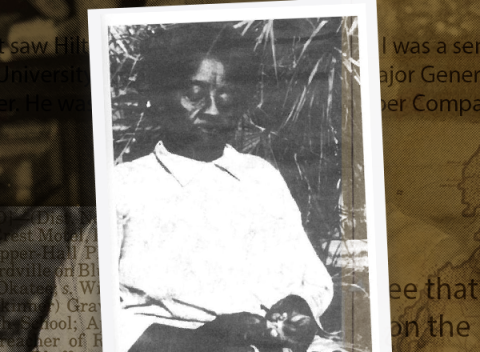
So that’s how come I got the job. And I worked on the Island for 39 years, and would have worked longer because I wasn’t at the retiring age, in 1969, but I had to come out on account of desegregation. At that time, they were all Black students on the Island; there was no white at that time. And so there were two Black teachers at the time. And they had to desegregate the teachers, so I came out and Conroy came in.
Audio file
Savannah River water runs out through the rivers of—Mongin River, which is the river for Daufuskie, and being that the oysters die from the pollution of the water, so the factories had to discontinue. Then employees, the menfolk, [inaudible] the cotton went bad, the oysters went bad.
Audio file
There were sea-goin’ vessels that would come out here. If you were goin’ to Daufuskie, you’d go to Savannah, or Bluffton, or Hilton Head. You wouldn’t come from here. These are sailin’ vessels, with all the—brought in spices, and probably slaves, and everything else in here back in those days.
Audio file
That was where the light shone, and it synchronized with a light that was on that concrete footing there, between the two little wineries. That was a tower about a hundred feet high. And that was the back range.
Audio file
Train went down almost to what they called “Jimmy Lee’s Landing.” There was a little old shack down there, where they opened oysters. They’d bring oysters in and open ‘em up, and they’d take ‘em over to the public landin’, where the big house was. They had a large oyster-shuckin’ place over there.
Audio file
Well, along that ditch goin’ over and toward the front of Flossie’s now, they raised rice. ‘Cause she said that the ricebirds got so bad, they ate the rice when it’s in its milky stage. Rice is in its milky stage before it gets firm, before it gets mature. And these ricebirds love that milky stage of the rice. And so, they just about eat it all up. So, they just had to quit doin’ rice, period.
Audio file
Bateaus were very popular back in those days. Back in the 1920s, and even earlier. In fact, I guess that was the only bateau that was made on the island. People really did enjoy rowin’ ‘em because they were easy to row and they were lightweight.
Audio file
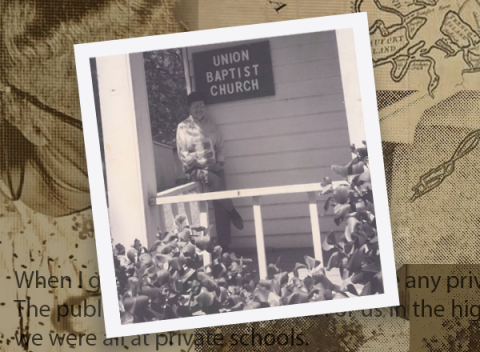
It was yours, and it was not yours. It's like living next to a couple of lots that are not yet developed, and you can go out and play on those lots, but then as soon as the owner came and built a house on it, you were no longer able to play on that lot.
Audio file
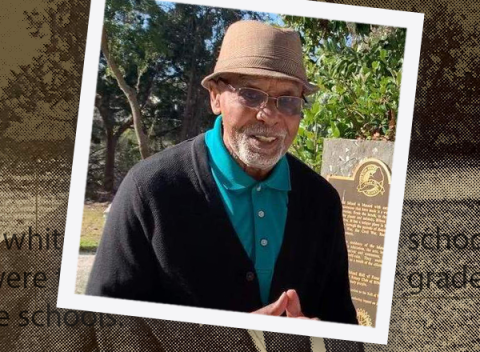
Fishing and farming, small farms was one of the main industries in the Island. Gathering oysters, and shrimping, fishing. The fishing was done when someone wanted to sell their fish, caught enough to sell. Either caught with a cast net or what we call a seine net of about 100 feet or so, depending on what the men could handle.
Audio file
The Black kids had to go to Beaufort, Savannah, someplace else to complete high school. They did not have a full high school. And so, after elementary school, many of them had to quit if the parents couldn't afford to send them away.
Audio file
When I came here, there were seven teachers with me at that school. My wife and I, we taught together. There were approximately 190 students in the school. I have been coming to Hilton Head since the end of the '30s prior to World War II as a youngster with my father, who was a presiding elder, which is a minister that presided over a district.
Audio file
So, what we did, we took an ambulance over to the other side on a boat, and they almost dropped it in the water trying to get it on a boat and left it over there. And then, we carried patients that needed ambulance service but not critically ill across the bridge on stretchers and put them on an ambulance on the other side. We'd bring them to the bridge, put them in the ambulance, and then take and carry them across.
Audio file
So, that's the most I've done here on the island. But in the process, the Deep Well Project, when it was incorporated, also said besides good water supply and the septic systems, we also would provide social services as requested by the people. So, now, of course, we don't put in septic tanks anymore because there really is no need for them.
Audio file
And then, a woman in the church came up to me, and she said, did I need money? And I said of course, I needed money and that all I had to give was my time. She gave me $10,000. And of course, we got it through the Presbyterian Church because she needed a tax write-off for that $10,000.
Audio file
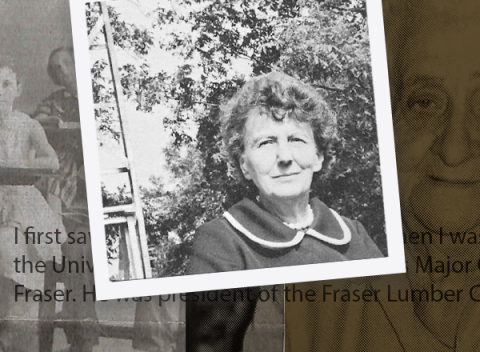
They put a pipe about three feet down in the ground and put a pitcher pump on it, and that's the water they drank. And of course, they didn't have any plumbing in their houses, and they just threw the waste on the ground. And they didn't have septic tanks either.
Audio file
I was interested in trying to continue helping the children if I could because I've been told that the big health problem on Hilton Head was the worm infestation among children.
Audio file
I wasn’t involved in desegregation. I grew up in a segregated system. Went to school all 12 years in a segregated system. And it wasn’t until after I went to college and got out of that, that the effort of integration began. In Beaufort County, integration didn’t come until about nine or ten years after I left high school.
Audio file
We didn’t have any white people on this Island. And the stores were owned by Black people. [laughter] And so, we didn’t have—when white folks and white people came to the stores, I used to notice that more.
Audio file
Do you stick out your chest and be Black? Well, I did some of that, too. I remember. But then, we had to work as a team. And we laughed, we had to have teamwork, and all these projects that were thrown at us, we had to do with our team.
Audio file
From this county, I don’t know. For one white school on this island, there must’ve been about four or five little Black schools, you know? ‘Cause they had neighborhood schools.
Audio file
That was the 1954 new Black school. That school was built in 1954 and consolidated all those small schools that I listed before. And that was pretty much the answer to our situation. In other words, improved to have a better school. But then, they also did the same thing for white schools. So, that was, supposedly separate but equal.
Audio file
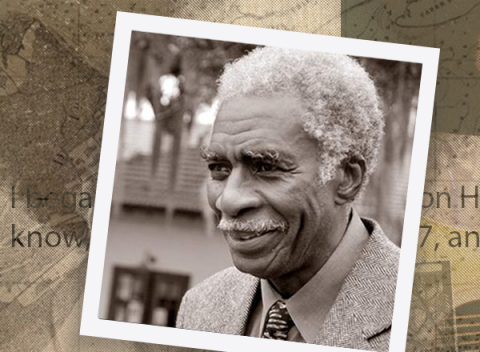
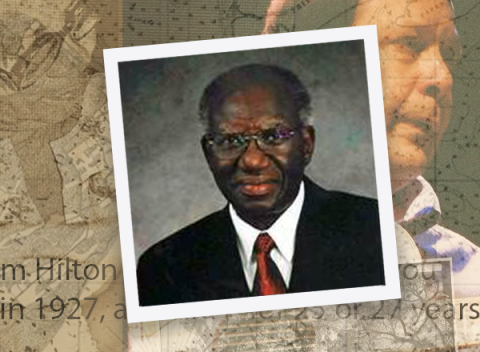
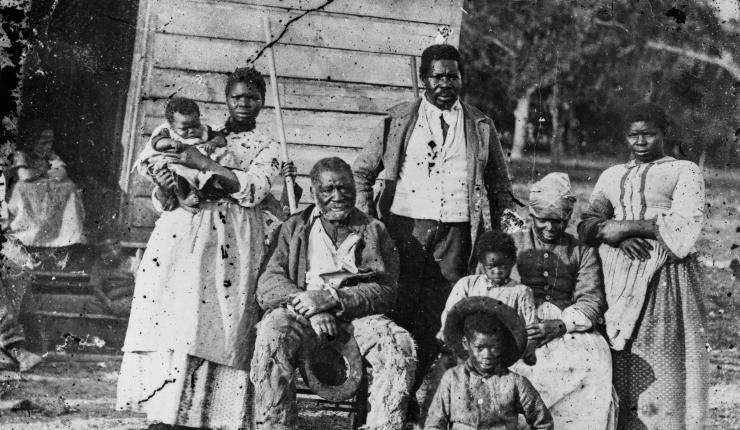
The residents of the Black community were former slaves, who literally survived here from the time they were brought into slavery, to freedom, up till today. The ancestors are still here from those slaves.
Audio file
Many of the residents here were sailors, who actually use sailboats not for pleasure, but working boats. They transported produce to the market in Savannah from this island by sailboats.
Audio file
We had men here who they referred to pretty much as herb doctors. Those people would go out into the woods, they would extract certain roots, they would boil them, and they would come up with some interesting medicines.
Audio file
Our role models were well-behaved, generally hard-working, achieving people. That’s the thought that I’m having about all of this foolishness, and people not caring, and not trying, and not wanting to do things, just being lazy.
Audio file
At a certain time of the year, you would just scoop up the turkeys, and crate them off to Savannah, and you could sell there at the market. The fishermen sold a lot of fish at the market in Savannah.
Audio file
When I grew up, the whites didn’t have any private schools. The public schools were theirs. For us in the higher grades, we were all at private schools.
Audio file
And all my children started having children. But I teach them—and everyone didn’t stay in school too long; they learned so fast until the people that—they could skip grade. At that time, they could go to school at five years old.
Audio file
Sometimes he have them practice teaching. And I was just hoping for he to let me teach because I just feel like I could teach the third grade. But I was in... but I never had a chance. He never gave me the chance.
Audio file
Oh, they used to be on the game—on the team, and they had friends, you know, but they all were Black, then, in their time. Yeah. And they used to come from school in the evening and have a way to go back to play ball after. Because it would mostly be at night time they would have the ball game. And they seemed like they got a kick out of it. Yeah.
Audio file
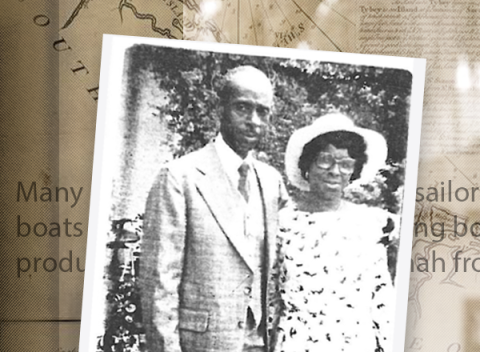
I used to tran…you know, transporting—I began transporting from Hilton Head to Savannah, you know, by boat. I started in 1927, and did it for 25 or 27 years. We would unload for more than 15 years the trucks and buses.
Audio file