

Be Part of the Project
Recover. Restore. Remember.
Be Part of the Project of a Lifetime
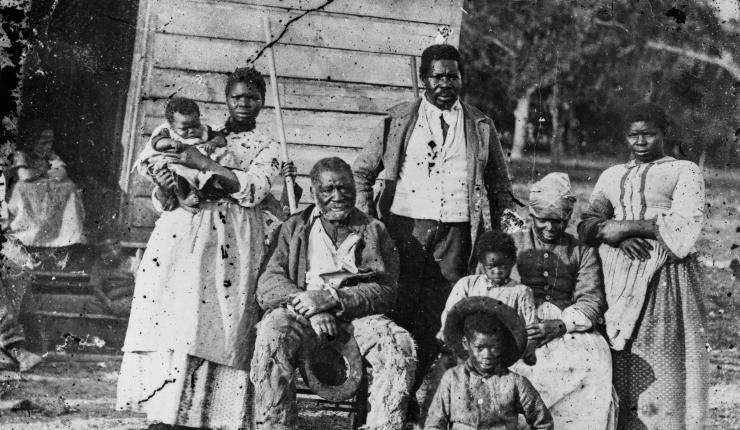
Explore Hilton Head Island
Introduction Text Subtitle
Lorem ipsum dolor sit amet, consectetur adipiscing elit. Etiam in felis ut ligula ullamcorper ultricies. Donec varius elit sit amet leo rutrum, sed fringilla tortor ornare. Cras eget dignissim erat, sit amet dictum orci. Vestibulum vulputate hendrerit massa. Etiam ac nisl a erat laoreet tincidunt quis imperdiet lorem. Donec eros lacus, egestas et massa in, convallis egestas justo. Nullam dictum leo ipsum, auctor bibendum neque gravida id. Aenean posuere auctor ligula, non porta odio iaculis ac. Etiam feugiat enim sed pharetra imperdiet. Aliquam tincidunt venenatis nisl, vitae posuere nibh mollis accumsan. Nullam hendrerit a libero sed viverra.
Explore the Places
Hilton Head was the first free place for slaves. The other slaves from the upper part of Georgia and some Florida, they came, because they were able to buy land on Hilton Head and Daufuskie, which they made they home.
That’s how my grandparents and her parents, and her grandparents, came from St. Simons Island, Georgia.
That’s how my grandparents and her parents, and her grandparents, came from St. Simons Island, Georgia.
Audio file
This candy was made from cane syrup, and they would boil this syrup until it becomes that thick—they’d test it that when they drop it into a little water, it would become all crystalized. But before it gets in this position to becomes crystallized, they would let this cool off enough that you could handle it with your hand.
Audio file
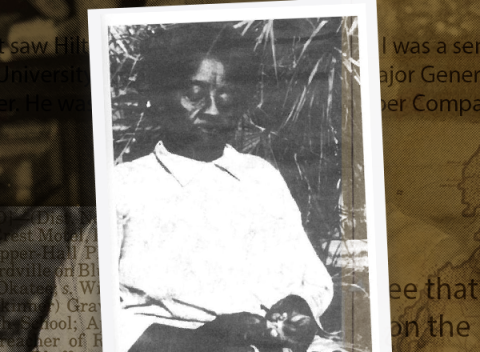
So that’s how come I got the job. And I worked on the Island for 39 years, and would have worked longer because I wasn’t at the retiring age, in 1969, but I had to come out on account of desegregation. At that time, they were all Black students on the Island; there was no white at that time. And so there were two Black teachers at the time. And they had to desegregate the teachers, so I came out and Conroy came in.
Audio file
Savannah River water runs out through the rivers of—Mongin River, which is the river for Daufuskie, and being that the oysters die from the pollution of the water, so the factories had to discontinue. Then employees, the menfolk, [inaudible] the cotton went bad, the oysters went bad.
Audio file
There were sea-goin’ vessels that would come out here. If you were goin’ to Daufuskie, you’d go to Savannah, or Bluffton, or Hilton Head. You wouldn’t come from here. These are sailin’ vessels, with all the—brought in spices, and probably slaves, and everything else in here back in those days.
Audio file
That was where the light shone, and it synchronized with a light that was on that concrete footing there, between the two little wineries. That was a tower about a hundred feet high. And that was the back range.
Audio file
Train went down almost to what they called “Jimmy Lee’s Landing.” There was a little old shack down there, where they opened oysters. They’d bring oysters in and open ‘em up, and they’d take ‘em over to the public landin’, where the big house was. They had a large oyster-shuckin’ place over there.
Audio file
Well, along that ditch goin’ over and toward the front of Flossie’s now, they raised rice. ‘Cause she said that the ricebirds got so bad, they ate the rice when it’s in its milky stage. Rice is in its milky stage before it gets firm, before it gets mature. And these ricebirds love that milky stage of the rice. And so, they just about eat it all up. So, they just had to quit doin’ rice, period.
Audio file
Bateaus were very popular back in those days. Back in the 1920s, and even earlier. In fact, I guess that was the only bateau that was made on the island. People really did enjoy rowin’ ‘em because they were easy to row and they were lightweight.
Audio file